
Always on the Cross
St. Mother Teresa of Calcutta had a mystical vision of Jesus in a homeless man on the street who said to her, “I thirst,” and on the basis of that mystical encounter, she left everything and founded the Missionaries of Charity. I don’t have her holiness or her mysticism, so I have to make an effort each day to go back and see where I encountered Jesus in those who are suffering.
But lately, things have become more clear, sometimes startlingly so. I visit Sunshine in the hospital and come back to my room, stunned when I see Jesus on the cross lying on my bed (where I leave my crucifix every morning). I just saw You, I think. I close my eyes, and I see Sunshine again, stretched out in his bed, unable to walk, the phlebotomist pricking his fingers to draw blood. I open my eyes and there is Jesus on the cross.
“Why are You always on the cross?” I ask Him. “Will You ever be resurrected in them? Will I ever encounter You outside the tomb?”
Tim can’t stand up straight because of the pain from his hernias, not to mention the weight of his broken heart. Riley feels worthless. Josh hears three distinct voices that oppress him and make him feel that he will never do anything right. Cami can’t kick fentanyl. John’s shame is so heavy that he can’t stop drinking, then hates himself even more for drinking. Kayla can’t move about on her own because of her lupus. Kate wouldn’t give up her dog Axle to be able to go into a maternity home—her baby will be born homeless, like her. Isaac can’t work up the nerve to visit his family. Ben doesn’t believe he can live a better life.
All day, every day, they are hated, despised, spit upon, mocked, swept from their campsites, disparaged. Their things get stolen. Sometimes people light their tents on fire. Many days someone will try to run over them with a car.
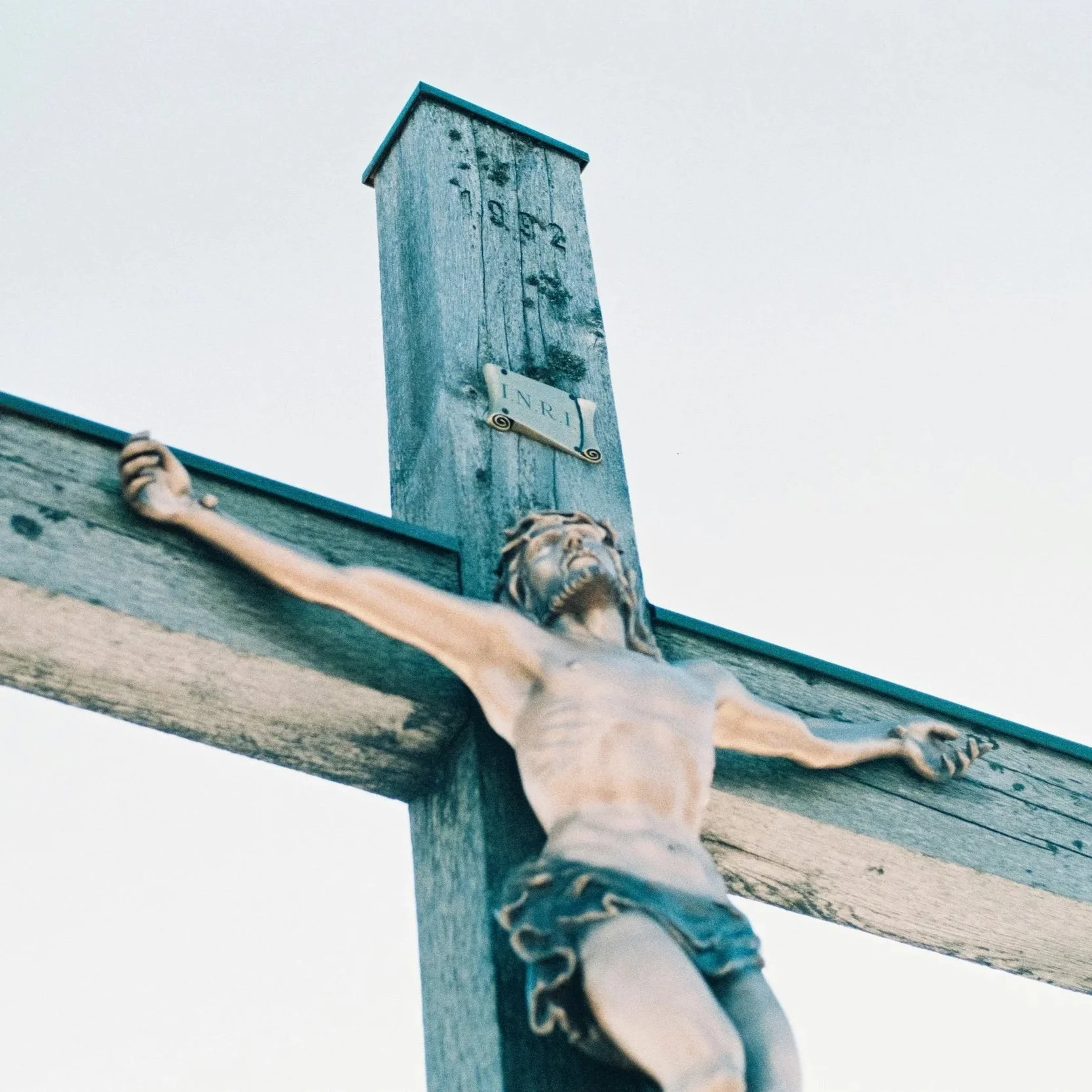
photo by Christoph Schmid on Unsplash
And all we can do is stand there, unable to do anything more than just be present, just look at them with love. I don’t know how Mary did it, her feet fixed to the rock of Calvary, her eyes fixed on the broken body of her Son, unmoving. What did her presence mean? What does it mean to stand at the foot of the cross? What difference does it make?
Jesus died after all. Three hours of excruciating agony, his body bloodied, his skin shredded, his hands and feet pierced by thick nails, his face covered in the blood that dripped down from the cruel thorns, his lungs slowly filling with fluid, his eyes full of tears. All Mary could do was stand there and weep and look at him and love him.
So much of the time that is all we can do, too. It hurts. We want to be able to do something, to make some part of their broken story better, to somehow go back in time and hug the little children they were, to tell them they are beautiful and good and worthy of love, to peel off the labels of problem-child, criminal, good-for-nothing, addict, before they have a chance to stick so seemingly permanently. But all we can do is be there now, at the foot of the cross of addiction, of physical suffering, of mental anguish, of broken-heartedness.
Fr. Boniface Hicks says that trauma happens when we are alone in the pain. And what heals trauma is someone being present to the pain, willing to be with you in the place of suffering, willing to love you.
So I stand here now, outside Kayla’s camper door, or beside Sunshine’s hospital bed, or at the end of Riley’s truck bed, or beside Tim by his campfire, hand on their shoulder, tears in my eyes, fighting the feeling of futility, being present to their pain, looking at them with love.
~Sister Teresa